|
Spring Edition
Welcome to the Spring edition of our Newsletter
 AVERAGE ASKING PRICES UP 4.9% IN THE FIRST THREE MONTHS OF 2012
Early indicators suggest that property market activity in 2012 is on course to be more robust than in 2011. New sellers' average asking prices are up by 1.6% this month and are seeing their strongest start to the year since 2004, fuelled by the continuing shortage of suitable stock and a jump of 16% in search activity on Rightmove during the first quarter.
New sellers' average asking prices are up by 1.6% this month and are seeing their strongest start to the year since 2004, fuelled by the continuing shortage of suitable stock and a jump of 16% in search activity on Rightmove during the first quarter. With estate agents both north and south reporting some encouraging seams of activity in select market sectors, average asking prices are now 2.2% higher nationally than a year ago.
Those property types favoured by first-time buyers have seen the largest price rises in the last 12 months. Terraces are up by 2.8% and flats have risen by 3.1%, out-performing semi-detached and detached property types. This suggests a pick-up in activity from first-time buyers and buy-to-Iet investors at the lower end of the market. However, sellers of properties between &125,000 and &250,000 will be concerned that the loss of the first-time buyer stamp duty incentive reducing their target audience of potential buyers. Around 40% of the properties currently on Rightmove are priced within this bracket.
March 21st 2012 – Property News
WHAT'S ON GUIDE
For a comprehensive guide to all the leading events that are taking place
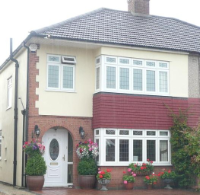 HOME AFFORDABILITY IN THE UK AT IT'S BEST FOR ALMOST A DECADE
Home affordability in cities in the UK is at its most favourable in nearly a decade, according to the latest LloydsTSB Affordable Cities Review. The average price for a city home in the UK is &173,202, some 5.5 times gross annual average earnings, the lowest ratio since 2003 when it was 5.3.
This is an improvement on 5.7 times gross annual average earnings a year ago and is significantly below the peak of 7.2 in 2008. But despite these gains in affordability, city living remains less affordable than the UK average of 4.3.
The marked improvement in affordability in cities over recent years has been driven by the significant fall in city house prices. Since 2008, the average city house price has fallen by 18% (&37,403) from &210,605 in 2008 to &173,202 in 2012.
Thirteen of the 20 most affordable UK cities in 2012 were also among the twenty most affordable in 2002. Seventeen of the 20 least affordable UK cities were among the 20 least affordable a decade ago.
'The improvement in housing affordability within many of our major urban conurbations has been significant during the past few years and reflects the decline in house prices over the period. There is,however, a distinct north/south divide to the locations of the most affordable UK cities.
Looking forward, the marked improvement in city affordability is likely to help support demand for those able to enter the housing market.
www.propertywire.com TUESDAY, 03 APRIL 2012
 EXTRANETS REVOLUTIONISE INFORMATION FLOW
The launch of the iPad 3 earlier this month was the latest landmark in the tablet revolution in the consumer and business worlds. Their use in the property industry is becoming more common and, rather than taking bags of documents to meetings, a tablet is now often the only device needed. There is therefore a heightened need for an appropriate online portal through which to view and store documents. Extranets are increasingly being used to access files in the office and on the go. An extranet is accessed through a company website, and each user has their own user name and password that allows them to access to the documents that are appropriate to their work. The information is hosted via cloud technology and held within data centres, so it can be accessed from anywhere. The company that establishes the extranet can upload documents to it and change them, so that clients can review them. The slightest changes to portfolios can be viewed instantly, and it serves as a real-time reporting mechanism.
Some extracts taken from Property week 30/03/2012 in an article by David Hatcher
HELL HATH NO FURY LIKE A NEIGHBOUR WRONGED!
The message is that Neighbours should mediate and not litigate and should use a qualified professional like HILBERY CHAPLIN to ensure problems like those mentioned in the article do not arise in the first place.The cases In two recent decisions, the Court of Appeal expressed despair at the inability of neighbours to reach sensible compromises,  rather than help fund the legal profession (Oliver v Symons, 15.03.12, and Faidi v Elliot Corporation, 16.03.12).
In Colin and John Oliver v Symons, the parties disputed the width of a right of way along a track across farm land. The right of way allowed the use of agricultural machinery to pass along the track, but the track itself was not wide enough for the large agricultural vehicles used by the Oliver's to pass along without use of the verges either side.
The Olivers argued the extent of the right of way should not be limited to the track, but should include the verges and "swing space", to allow tractors and trailers to swing over when turning corners. However, the Court of Appeal agreed with the judge that land-adjoining rights of way should not be sterilised to facilitate greater use of the right and that generally, a landowner should be entitled to build right up to the boundary with a right of way. In the absence of any evidence that the use of large agricultural vehicles preceded the grant or was contemplated, the right of way did not include the verges or swing space.
The court said this was a case crying out for mediation. The Olivers had spent more than &150,000 in legal fees. With a modicum of good will on both sides, the court considered the matter could have been readily settled, and emphasised that solicitors should push the parties to mediate to avoid costly litigation that would blight their lives and leave them bruised by the experience.

In Faidi v Elliot Corporation, the parties were at loggerheads over noise from the defendant's flooring, which could be heard in the claimants' flat below. The claimants argued that works undertaken by the defendant to install timber flooring breached
terms of their lease that required carpeting, even though the landlord had authorised the works.
The defendants had spent &100,000 installing the flooring with heating below it and to lay carpeting above it would completely defeat the purpose of the works.
The Court of Appeal held that the landlord must have intended to waive the requirement for carpeting, even though the "licence for alterations" referred to all the provisions of the lease remaining effective. Accordingly, the works were lawful.
The court highlighted that this was exactly the sort of case where, with the assistance of a mediator, the parties could have agreed a sensible resolution that involved laying a moderate amount of carpet. There was simply no need for either party to have their day in court to determine the exact extent of their rights. Instead, they had incurred
costs of &140,000 between them, which, as the court made clear, only benefited their lawyers.
In words that every solicitor who acts in neighbour disputes will now be well advised to convey to their clients, Lord Justice Ward said: "Not all neighbours are from hell. They may simply occupy the land of bigotry. There may be no escape from hell, but the boundaries of bigotry can, with tact be changed by the cutting edge of reasonableness, skilfully applied by a trained mediator. Give and take is often better
than all or nothing."
Extracts taken from an article in Propertyweek, 30/03/12 written by Jonathan Ross who is head of property litigation at Forsters.
NOT JUST PROPERTY – THIS SECTION IS FOR FOOD LOVERS!
Portuguese food
Portugal has a rich maritime history, so it's no surprise that fresh fish and delicious seafood feature prominently in the national cuisine. Here are four favourite places to enjoy tasty traditional cooking:

Eyre Brothers 70 Leonard Street, London EC2A
The sibling owners of this sleek and sophisticated restaurant have created a menu offering delectable rustic cuisine, reflecting their upbringing in former Portuguese colony Mozambique. The signature dish - grilled fillet of acorn-fed Iberian pig, marinated with smoked paprika, thyme and garlic - should not be missed. A range of Iberian wines complements the dishes, which also include salt cod baked with potatoes, onion, red peppers and garlic, and grilled Mozambique tiger prawns.
To book a table call 020 7613 5346 or visit www.eyrebrothers.co.uk
O Fado 50 Beauchamp Place, London SW3
This restaurant opened in 1968, and it's been serving delicious authentic fare ever since. Begin with the mouthwatering chourico assado (or grilled chorizo) before tucking into delicious meat, vegetarian or fish dishes including the linguado a Fado (grilled Dover sole with lemon, butter sauce and prawns). Guests can also enjoy live music every Friday and Saturday evening.
To book a table call 020 75893002 or visit www.ofado.co.uk
Madeira Restaurante 2 Guildford Crescent, Cardiff CFIO
This award-winning family-run restaurant is located in the heart of the Welsh capital. The menu offers scrumptious fish dishes including caldeirada (a broth with potatoes, tomato and onions), monkfish and swordfish, and meat and vegetarian options cooked in a cataplana. The bife Algarve (slices of fillet steak cooked in rich white wine, garlic and demi-glace sauce) is also delicious.
To book a table call 029 2066 7705 or visit www.madeirarestaurante.co.uk
Casa Portuguesa The Square, Hadlow, Kent TN11
Casa Portuguesa specialises in shellfish dishes using a traditional cataplana – special cookware usually made of copper and shaped like two clam shells. The menu features a selection of meat and fish dishes including a range of bacalhau (salted and sun-dried cod) dishes. Among the vegetarian options is a traditional soup, caldo verde, which uses ingredients grown by the owners. To book a table call 01732 851 489 or visit www.casaportuguesauk.com
 NOT JUST PROPERTY – ANOTHER SECTION FOR FOOD LOVERS!
Tipped to be the next big trend, Peruvian food has arrived with the opening of Ceviche Have diners discovered the, new sushi? The owner of Ceviche, a stylish Peruvian restaurant just opened in London's Soho, thinks so.
Martin Morales's restaurant takes its name from Peru's popular, zingy dish made with raw fish marinated in lime and lemon juice and given a twist of chili. Like sushi, it's healthy, light and refreshing - and is winning over foodies seeking the next big culinary thing.
Peruvian cuisine takes influences from Asia, Europe and Africa as well as South America. Ceviche's menu incorporates these flavours in dishes such as causa marsquid, prawns and avocado on a yellow potato cake with spicy Huancaina sauce. Food is made at the bar in front of diners.
Ceviche's Pisco Bar is Europe's first and only bar specialising in pisco, a Peruvian brandy distilled from fermented grape juice. Diners can taste Peru's national drink, pisco sour, or choose from an array of cocktails and infusions. The restaurant has been designed to reflect Lima's intoxicating vibe with bright colours, vintage mirrors and poster art. Peruvian cuisine is firmly on the map in London and ex-music industry exec Morales is excited to share his passion. "I was always keen to make Ceviche a place where people from every walk of life could come in for a pisco sour and a plate of the finest ceviche. This is a lO-year dream come true."
www.cevicheuk.com

 REVIEW OF NEW INITIATIVES ANNOUNCED BY GEORGE OSBORNE - A to Z: BUDGET 2012
Auctions The land auction scheme has been resurrected
Business Chancellor George Osborne said the Budget "unashamedly backs business"
Capital allowances Enterprise zones including London's Royal Docks site will get enhanced capital allowances
Deficit is forecast to shrink to 43% of GDPby next year
Empty rates The government ignored calls to reduce the tax paid on empty properties
Fuel duty A rise of 3p a litre will go ahead as planned
Growth of 0.8% is forecast for this year
Hezza Lord Heseltine will conduct a review of how the public and private sectors can
help to drive growth
Infrastructure A national plan to improve the UK's roads and railways was among proposals
Jobs Welfare reform strategy aims to help people back into work -
Kickstarting development The Growing Places fund for stalled schemes received an extra cash injection
London The capital will get a &70m development fund
Millionaires' Budget Labour Party members criticised the chancellor for scrapping the 50% income tax bracket
Northern Hub Network Rail's northern upgrade programme will be extended
Office of Budget Responsibility The Budget was based on the office's gloomy growth forecasts
Presumption in favour of sustainable development The final version of the National Planning Policy Framework (NPPF) retains this key tenet, which is opposed by green groups such as the National Trust (opinions, below)
Queen launched the celebrations for her Diamond Jubilee during Budget week with a speech to both houses of parliament
REITS The Treasury will consult on social housing REITs,but not mortgage REITs
Stamp duty land tax A 7% rate will be introduced on homes worth more than &2m, which rises to 15% for those bought through a company
Tax-increment financing &150m has been set aside to help councils fund TIF schemes U-turn The pledge to confront the lack of airport capacity raises possibility of a future
U-turn over a third runway at Heathrow
Victory Property Week's Campaign for Sustainable Development prevailed over planning reforms
Wallace and Gromit Tax breaks for some TV productions aim to stop British film companies going abroad
X-factor Time will tell whether the Budget contains the vital ingredient for growth
Young George Osborne is one of the youngest chancellors to deliver a Budget
Zero carbon Carbon Reduction Commitment scheme may be scrapped .
in Property Week 30/03/2012
 ROUGH JUSTICE- DANGERS OF FRAUDSTERS IN THE LETTINGS MARKET
In the murky world of private residential lettings, something recently stirred. In Croydon Crown Court, an asylum seeker from Zimbabwe, who continued to defraud landlords even while on bail, was convicted on several counts and jailed this month for four years and three months, after which she will be deported.
Rose Chimuka had been running the scam for years and cost many landlords tens of thousands of pounds each. The fraud was based on renting houses and flats using false identities and forged documents. Chimuka would pretend to be a mother of three with a husband who was in well-paid employment. Phone numbers she provided to confirm her references were answered by her male accomplice, who confirmed her lies, pretending to be a husband, former landlord or employer. Once in a property, Chimuka's method was ruthlessly simple. She would change the front door locks to keep the genuine landlord out, and then put locks on all the internal doors. She then sublet rooms to unsuspecting tenants who believed she was the owner. She pocketed all their rents while giving the real landlords nothing but grief and expenses.
Magda Szlenkier let out her family home in Montague Avenue in Brockley, south-east London, in 2009 when work took her to live in Hong Kong. Her letting agent, Medics on the Move, introduced Chimuka, who claimed to be a married mother of three. "I was pleased to have a family rent my home where three of my own children had been born," Szlenkier recalls. She says the agent confirmed that Chimuka's salary had been verified and the revious landlord - who must have been the accomplice on the phone - verified that they had paid the rent on time for three years. Once in possession, however, Chimuka sublet all the bedrooms. Szlenkier, now in Hong Kong, was alerted by a neighbour. "I flew back to the UK to find there were 15 people in the house. I was able to meet 10 of them, who all thought that Rose was the legal landlord." By the time she regained possession, her losses
totalled &42,000.
Tommy Loughman bought a house in Therapia Road in Forest Hill, south-east London, as an investment. Letting agent Acorn introduced "Emily Mapera" and her "husband and three children". Two months after letting to Chimuka in 2009, Loughman was contacted by the environmental health department of Southwark Council to inform him that his property was in multiple occupation. The internal doors had been fitted with locks, and there were double beds in all eight rooms with TVs, VCRs, clothing and sanitary goods. "I tried to get into my own property, but Rose called the police stating that a disturbance was being caused," says Loughman. "When I explained, Rose was actually arrested - but she was released minutes later following a call from the station, apparently stating that she was an asylum seeker from Zimbabwe." By the time he regained possession Loughman had lost &36,000 in rent. It cost him a further &50,000 to repair the damage to the property.
The problem is that, although the Consumers, Estate Agent Redress Act 2007 (CEARA) finally and belatedly required all sales agents to register with a redress scheme, there was no such requirement for letting agents. This leaves both landlords and tenants few options when the agents fail them. Ombudsman Christopher Hamer has witnessed improvements in standards relating to sales agents. He is convinced that "if letting agents were compelled by law to register with a redress scheme, standards across the letting: industry would improve in a similar way as the credit squeeze continues to prevent first-time  buyers from stepping on to the property ladder, and generation rent" is here to stay, the clear message to the government is: do something now to clean up residential lettings agency.
At HILBERY CHAPLIN, we are members of ARLA and RICS which ensures we maintain the highest standards and ethics as we are regularly audited to ensure total compliance.
Extracts from an article in Property Week 30/03/2012 written by Mira Bar-Hillel, property and planning correspondent with the Evening Standard
 PLANNING REFORMS WILL UNCLOG 'SILTED UP' SYSTEM
The government's planning reforms were lauded by business groups for unlocking a "silted up" planning system. Planning minister Greg Clark unveiled the National Planning Policy Framework during a speech to the House of Commons on Tuesday. He announced that the policy protected "what we hold dear in our matchless countryside and in the fabric of our history", yet "will help build the homes the next generation needs".
The reforms, which were published in draft form by the government last July, contained a powerful "presumption" that stated that any development deemed "sustainable" should go ahead, unless opponents could prove why it should not.
The final publication also cut more than 1000 pages of policy down to fewer than 50. The draft sparked a backlash from conservation groups, led by the National Trust who warned the wording could leave the countryside vulnerable to development, and called for the proposals to be delayed while councils draw up local plans. But the government has stood firm in the final version, stating that the presumption will come into force immediately for councils that have not drawn up plans since 2004. Councils that have drawn up plans since 2004 will be given 12 months to update them before the presumption comes into force. Research carried out by the Campaign to Protect Rural England states that 48% of councils do not have an up-to-date local plan. Despite relatively small changes to the original draft, the National Trust appeared to be placated by the framework. Its director-general, Dame Fiona Reynolds, said the changes "improve the document and give it a better tone and balance".
John Longworth, director general of the British Chambers
of Commerce, said: "It will also allow planning to be restored to a
positive tool, rather than a weapon used to fight reactionary battles
against change, growth and jobs." Baroness Valentine, chief
executive of London First, said: "Getting rid of-bureaucracy
that has silted up our planning system will help to unlock development and promote growth." The framework strengthened both the wording stating that developers must build on previously developed or brownfield land in favour of green belt, and the obligation for developers to build offices in town centres,
rather than out of town. The reforms also recognised the "intrinsic value of the countryside" a phrase that had been removed in the original draft much to the dismay of conservationists.
Extracts from an article by Patrick Gower in Property Week 30th March 2012
NOT JUST PROPERTY – SOCIAL DEBATE - Should the UK have nuclear energy? YES OR NO?
|
Clean, cheap and safe - words not often linked with nuclear power, but a year after the Fukushima disaster, they still accurately describe a vital energy source. Nuclear is certainly clean. Life-cycle CO2 emissions are estimated at 66g per kWh, compared with 443g for gas and 1,050g for coal, while particulate emissions are zero. It's also cheap, levelised over a lifetime. A report for the Civitas think tank says nuclear has the lowest levelised costs over a lifetime of any electricity source, once the rising carbon price floor (for gas and coal) and the costs of intermittency (for renewables) are considered. As a stable electricity producer, it's also a hedge against gas supply interruptions. And nuclear is rarely fatal. EU-led research shows that nuclear is the safest energy source, with a death rate of less than 0.2 per gigawatt-year, compared with rates of 0.4 for gas and more than four for oil.
We're unlikely to spot atomic power stations dotting the landscape soon, but we should at least be replacing reactors that will come to the end of their lives over the next decade. The big problem is finance - although nuclear is not particularly expensive, capital costs make up around four fifths of the total. With a long payback period and doubt over energy policy, that's a big hurdle for investors.
Corin Taylor who is a senior economic adviser at the IOD.
|
|
From a climate change point of view, coal and gas power is more problematic than nuclear energy because they are high-carbon fuels, and we need to move to a low-carbon world. But Friends of the Earth has long campaigned against nuclear power because of the risks of nuclear proliferation and handing on toxic waste to future generations. Neither has been dealt with. David MacKay, chief scientific officer at the Department of Energy and Climate Change, says it's possible to meet Climate Change Act reduction targets without nuclear power. That would be our preferred route but we don't want to use coal or unabated gas instead.
We prefer to focus on renewable energies such as offshore wind and explore potential for wave and tidal power. Millions of pounds of subsidies have been ploughed into nuclear power. Building new plants is a huge construction project with large amounts of cash needed upfront. There is a fear that the government is putting too many eggs in the nuclear basket. It's expecting, as part of its decapitalisation strategy, to build more nuclear plants than is likely to be possible. Our fear is that if these plants aren't then built the gap will be filled by gas. Storing nuclear waste in deep underground repositories passes it on to future generations. But we should leave the earth in as good a shape, if not better, for the next generation - and you can't do that with nuclear power.
Mike Childs who is head of science, policy and research at Friends of the Earth |
Extracts from an article in The Director magazine
 LITTLE CHANGE FOR FIRST-TIME BUYERS SINCE 1950's
As first-time home buyers continue to struggle to get on the housing ladder, a new report by London South Bank university masters in real estate course director Scott King analyses how trends have changed since the 1950s. King compiled the report, which surveys 2,000 adults, on behalf of the TV channel Home to coincide with the launch of its First Home programme, presented by Gaby Roslin.
The results showed that, although most people are struggling to get a mortgage, the average age of he first-time buyer has remained consistent over the past five decades. Last year initial property purchases were made by those aged 29, while in 1970 the average age was 27.
It also found that a prospective buyer expects to pay &155,563 for his or her first home, putting down a deposit of around &19,719. This contradicts figures from last year that found that in most parts of the UK, the average first-time buyer paid &138,682 with a &17,000 deposit.
Even though house prices have doubled in the last 10 years, surprisingly the percentage of income spent on mortgages has actually decreased from 34% in the 1980s. It peaked at 50% in 2007 because of the housing market crash, before falling to 27% in 2011.
And while in the 1970s most people purchased houses with a garden, today more than a third said a flat with off-street parking near good transport links and a supermarket was the main requirement.
Excerpts from an article in Property Week – 05/04/2012
HOME SALE NETWORK - CONNECTING BUYERS AND SELLERS ACROSS THE COUNTRY

National Network
All members are independent businesses as distinct from large, corporate chains.
there are Home Sale Network members in major towns, cities and rural areas, who by working together can assist families buying and selling property around England, Scotland and Wales.
Selected Status
Home Sale Network is highly selective in its invitation only membership, basing its criteria on quality of service, local knowledge and professionalism.
This selection provides assurance to you, of the service you will receive, whichever HSN agent you visit.
International Connections
Home Sale Network is a division of Cartus, the premier provider of global relocation services, moving over 140,000 customers worldwide per year.
Working with many blue chip household names, Cartus relocates families to 160 countries worldwide.
Cartus relocates families for a number of FTSE 100 companies.
With over 30 years UK property experience Cartus knows what makes a good estate agent.
In the UK Cartus uses Network members to help buy and sell homes for these relocating families.
Access to our of town buyers
Through Cartus, HSN members have unique access to our of town buyers moving into their area.
In addition to families relocating with Cartus, HSN members help house movers across the country by referring buyers and sellers from one are to another.
Software links each member office to assist buyers and sellers, no matter where they are moving from or to.
Want to know more?
Why not access our property website at: www.home-sale.co.uk
 MORTGAGE LENDING ROSE IN FEBRUARY, CML SAYS ...
The number of loans made for house purchase rose by 4% from January to 36,600, which was also 17% higher than in February last year.
The number of loans made to first-time buyers also rose, by 8% from January to 14,100, which was 18% up on last year. The CML said the rise may be temporary, now that full stamp duty has been reimposed for first-time buyers.
CML director general Paul Smee said: "It is encouraging to see the continuing year-on-year improvement in house purchase lending. "However it is not yet clear whether the end of the stamp duty concession will lead to a falling off in first-time buyer numbers and how much this may be offset by the government's NewBuy scheme, available to all buying a new build property.".
'Fizzling out'
The government-sponsored NewBuy scheme, which has only just been launched, is aimed at helping 100,000 people in England buy newly-built homes with a mortgage, even if they cannot stump up more than a 5% deposit from their own funds.
The modest recent pick up in lending during February went hand-in-hand with a rise in completed sales that month, to their highest February level the past four years.
However, both lending and sales are still running at levels far below those seen before the onset of the banking crisis in 2008.
And other figures have suggested that activity may fall back again soon.
The most recent data on mortgage approvals - mortgages agreed with borrowers but not yet lent - have suggested that sales may dip soon.
Last month, the Bank of England said that approvals, which are a good indicator of near-term trends, fell by 15% in February to just under 49,000, the lowest monthly figure for eight months.
Lenders have also warned the Bank that they expect to ration their mortgage lending even more in the coming months, which is likely to restrict sales even more.
Mark Hollands, of mortgage broker London Money, said: "February's rise in first-time buyers is almost certainly due to the stamp duty holiday and will almost certainly fizzle out."
"Lending criteria are too tough, the deposits required too large."
For further information contact Hilbery Chaplin on mortgages@hilberychaplin.co.uk
OUR HOT PROPERTY OF THE SEASON

A secluded position in the heart of Fryerning.
The accommodation of approximately 6,000 sqft sits in grounds of in excess of ONE ACRE (stls) of formal and immaculately landscaped gardens which incorporate a small wooded copse. Providing FOUR BEDROOM SUITES, open plan reception areas, bespoke built glass staircases leading to spacious hallways and landings. There is an adjacent converted barn, which provides a well equipped air conditioned Gymnasium, Changing room, Steam room, Hot Tub Area with sound system. The immaculately maintained landscaped grounds encircle the property with three electronically operated gates giving individual access. A truly unique property as this rarely becomes available in this location and it is without hesitation that we recommend an early internal viewing.
Price &3,600,000
<< News
|
|